

Track and Spot Buying Guide
Track and spotlights are among the most versatile lighting solutions for the modern home. This buying guide breaks down the key differences, applications and features to help you confidently choose the right lighting solution for your space.
Track and spot lighting give you the freedom to build lighting around how you live, not just how a room looks. From kitchen lighting to highlighting architectural features and creating consistent ambient light, both systems allow you to layer illumination and adapt over time. Understanding how each application works helps you choose a solution that suits your layout, lifestyle and design goals.
Track Lighting Systems
What is track lighting?
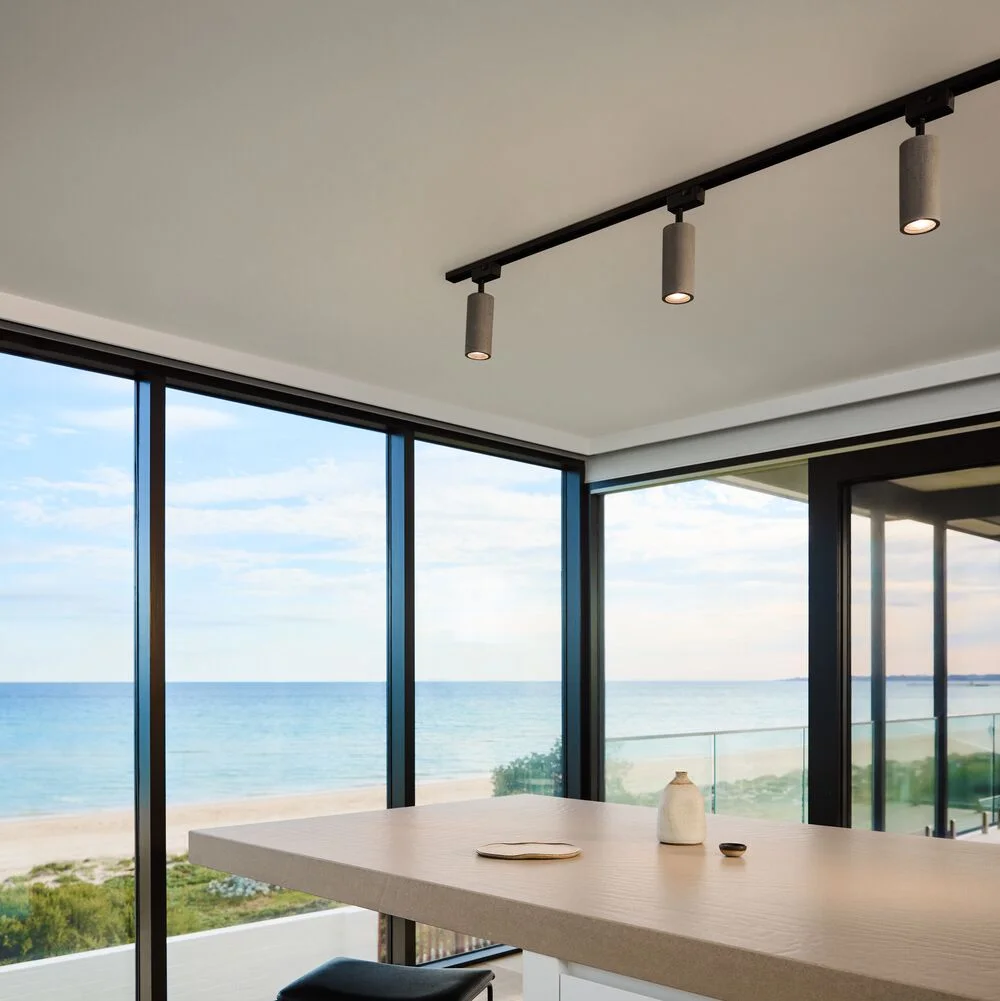
Track lighting is a flexible lighting system where multiple adjustable light heads are mounted along a single track, allowing you to direct light exactly where it’s needed. Each head can be positioned and angled independently, making it easy to adapt the lighting as your space or layout changes.
What is it best used for?
Track lighting is best used in open-plan areas, kitchens, living spaces and hallways where versatility matters. It works particularly well for illuminating kitchen benches, highlighting artwork, washing walls with light or providing adaptable general illumination across larger spaces.

Bar Spots & Single Decorative Spotlights
What is spot lighting?
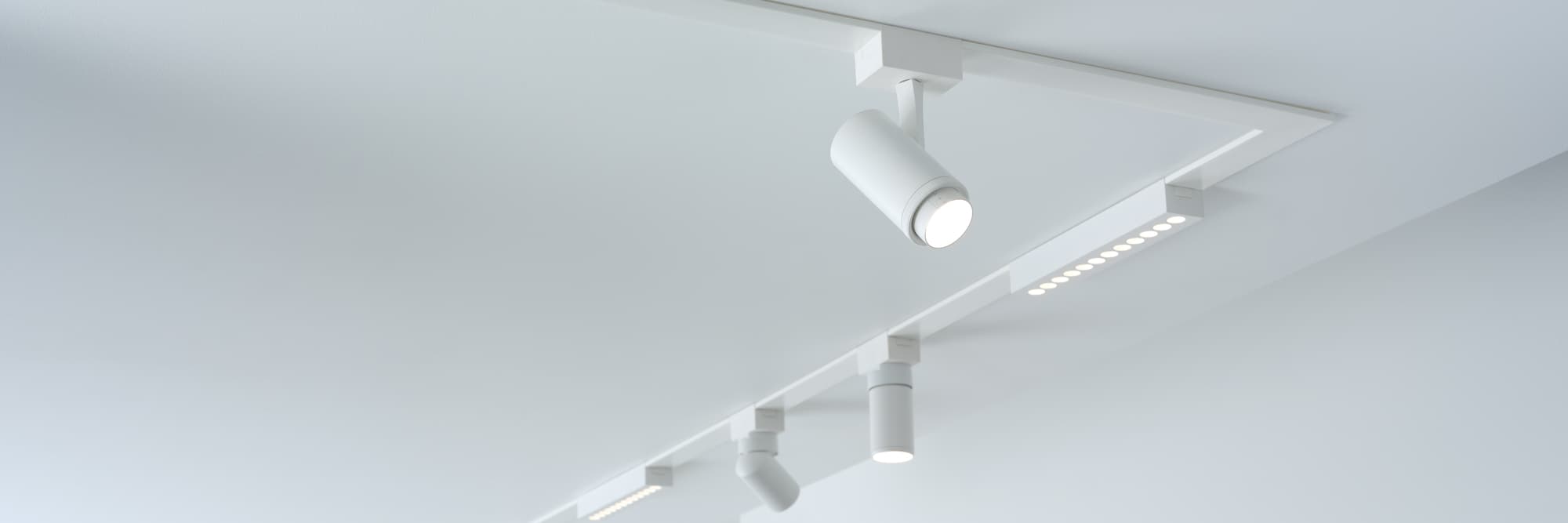
Spot lighting uses individual or grouped spotlights to deliver focused, directional light to specific areas. These fixtures are designed to draw attention to key elements within a space while adding an architectural finish.
What is it best used for?
Spot lighting is best used for task lighting, feature highlighting and accent lighting. It is ideal for kitchen islands, shelving, feature walls and artwork, or anywhere you want controlled pools of light that enhance texture and visual interest.
Track Lighting Purchase Process
Track lighting can feel complex to purchase. Unlike bar or spot lighting, which are typically sold as complete fittings, track lighting is made up of individual components including the track, track heads, globes and joiners, allowing you to customise the layout to suit your space. Understanding these elements is the key to selecting the right system, and the steps below outline what you’ll need to consider.

STEP TWO
Choose your track joiners
If you want to change direction or extend your track layout, add joiners. Use a straight joiner to connect multiple tracks for a longer run, or a right-angle joiner to create an L-shape. If you’re keeping it as a single straight track, you can skip this step.

STEP THREE
Choose your track heads
Next, select the track heads that suit the look and performance you want. Consider the style, beam angle, brightness and budget, as well as whether you prefer integrated LED or a globe-style fitting. If you want a more custom, design-led option, ranges like Skywire, MFL Rail and MFL Script are a great place to start.

STEP FOUR
Choose your globes
Some track heads include integrated LED, while others require a separate globe. Before you buy, check the product specifications to confirm which type you’ve selected. If globes are required, choose the correct base type and brightness to match the outcome you want in the space.
What Light Source Should You Use?
Track and spot lighting use three main types of light sources: integrated LED, GU10 globes and GX53 globes. While all deliver directional light, each offers different benefits in terms of flexibility, maintenance and performance. Understanding how these light sources work, and how they differ, makes it easier to choose the right option for your space and long-term needs.

LED
Integrated LED track and spot lighting features a built-in light source that is designed as part of the fitting itself. Because the LED is integrated, it cannot be replaced, but it typically offers a long lifespan of up to 30,000 hours.
Integrated LED lighting delivers excellent energy efficiency, consistent light output and streamlined designs. It is ideal for customers seeking a low-maintenance solution with strong performance. The main consideration is that once the LED reaches the end of its lifespan, the entire fitting will need to be replaced.
Advantages:
Long lifespan
Energy efficient
Clean, minimal design
Considerations:
Non-replaceable light source
Fitting must be replaced once LED expires

GU10
GU10 globes are a widely used, replaceable globe type commonly found in track and spot lighting. GU10 fittings allow you to change globes as needed, making them a flexible option for many homes.
GU10 track and spot lighting offers versatility, with a wide range of globe options available across different brightness levels, colour temperatures and dimming capabilities. Because the globe is replaceable, it provides long-term flexibility and easy maintenance.
Advantages:
Replaceable globe
Wide choice of globe options
Easy to service
Considerations:
Slightly bulkier fitting designs compared to integrated LED
Do not last as long as integrated LEDs

GX53
GX53 globes are a slim, disc-shaped, replaceable globe designed to deliver wide, even illumination while maintaining a low-profile appearance. It is commonly used where a more discreet fitting is preferred without compromising on light coverage.
In track and spot lighting, GX53 globes are ideal for general illumination and wall washing applications. Like GU10, GX53 globes are replaceable, making them easy to service, while their compact design allows for clean, contemporary fixtures.
Advantages:
Slim profile
Wide, even light distribution
Replaceable and easy to maintain
Considerations:
Fewer decorative globe options compared to GU10
Do not last as long as integrated LEDs
What Performance Features to Consider
Colour Rendering Index (CRI)
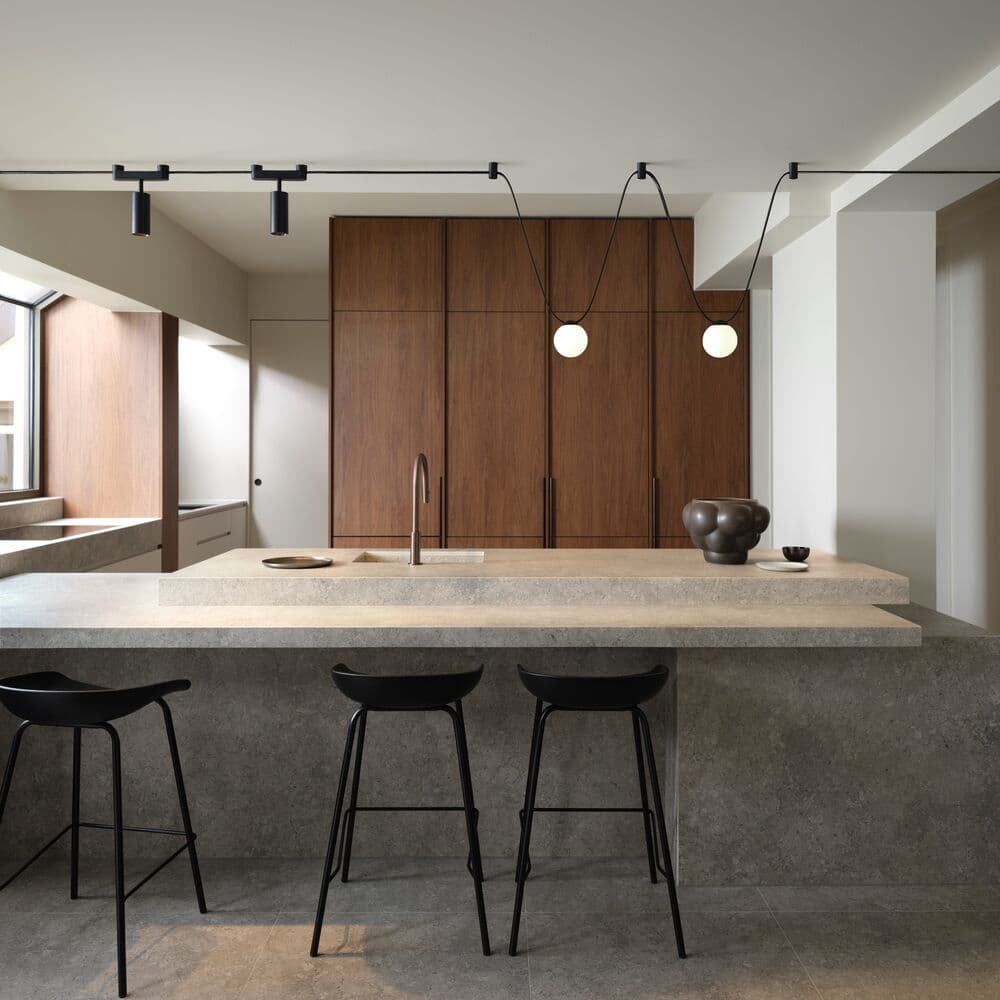
A high CRI rating (90+) ensures your lighting displays colours as naturally and accurately as possible. With tracks and spots often used to highlight artwork, furniture, and architectural details, choosing a high CRI fitting ensures your space looks vibrant and true-to-life. Lower CRI fittings can leave interiors looking flat, dull, or washed out.

Dimming and Ambience
Track and spotlight systems work beautifully with dimming to give you full control over mood and functionality. Use dimmable fittings or wire sections of track to separate switches for flexible zones of light. Prioritising flicker-free technology not only gives a smoother dimming experience but also helps reduce eye strain and headaches, making your lighting healthier as well as more comfortable.
Other Considerations

Spot and track lighting offer refined accent and task illumination, giving you control over exactly where and how light falls in your home. Their key advantage is adjustability - the ability to direct, angle, and reposition light as your space evolves.
Application and Design

Spots allow you to experiment with different lighting effects, from soft wall washing to focused accent lighting or general illumination. Because each head can be angled independently, you can layer light, highlight architectural features, or create contrast between light and shadow for added depth.
Design Possibilities

Directing adjustable heads toward a wall creates a gentle, even wash of light that opens up the space visually. For best results, aim spots 300–500mm from the wall and tailor the beam spread to suit the surface, whether smooth, textured, or patterned. It’s an elegant way to brighten hallways, feature walls, or display shelves.
Wall Washing and Accent Lighting

For broader coverage, use wider beam angles and staggered spacing along the track. Overlapping pools of light create a comfortable, consistent glow across the room, while the flexibility of repositioning heads allows your lighting to adapt naturally to layout changes over time.
General Illumination
Modern Form Lighting (MFL)
Modern Form Lighting is an architectural approach to lighting that prioritises clean lines, considered proportions and purposeful design. Rather than acting as decorative centrepieces, Modern Form fixtures are designed to integrate into contemporary interiors. In track and spot lighting, Modern Form Lighting offers a refined balance of performance and aesthetics, making it ideal for modern homes where lighting is both functional and expressive.
Skywire
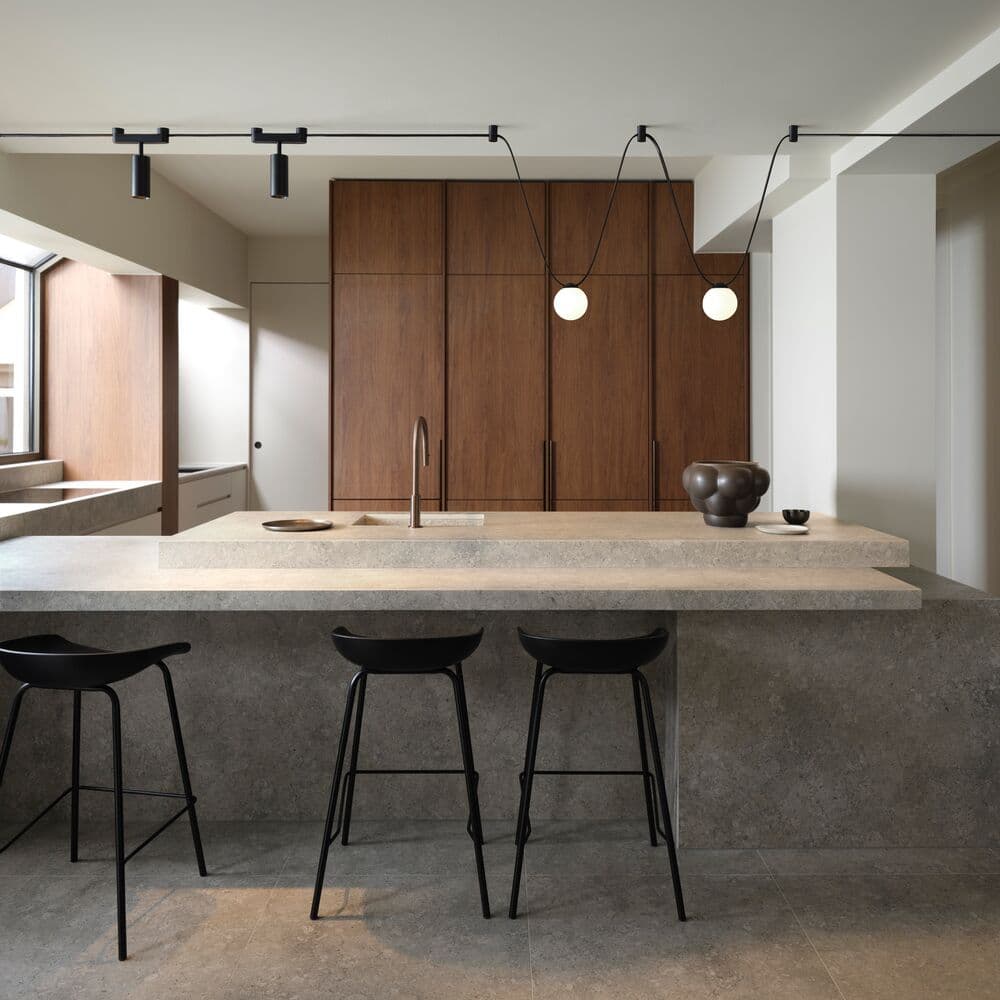
MFL Skywire redefines architectural lighting with an ultra-flexible low-voltage system that adapts to any space.

MFL Rail
The ultra-slim MFL Rail blends into ceilings with a discreet, linear profile that works beautifully in contemporary interiors. Perfect for highlighting artwork or gallery walls, it provides precise illumination without interrupting the flow of the space.

MFL Script
With over 220 combinations of heads, shades, and decorative handles, MFL Script takes customisation to new levels. Its clean, minimal design works as a blank canvas for personal expression, letting you shape lighting to match your style and your space.

MFL Induction
A bold, architecturally driven track system, MFL Induction combines premium materials with customisable flexibility.